
Building the connectivity layer between web technologies, AI and industrial hardware.
Abstract
Hardware, software, and legacy equipment currently exist in disconnected silos, forcing engineers to waste massive effort on glue-code and infrastructure scaffolding.
We solve this by standardizing every component—from 30-year-old industrial devices to modern cloud APIs — into a unified, type-safe architecture. By simply defining your logic in TypeScript, the framework auto-generates the necessaryinterfaces and APIs, allowing you to instantly modernize assets and orchestrate complex, distributed processes.
☝️ Instant Infra: From API to MCP to UI
When adhering to the provided schema, the framework automatically generates your Frontend, API, and MCP interfaces. You focus on writing the core function logic; the framework ensures the infrastructure is ready to run immediately.
🤲 Modular & Self-Documenting
Stronly opinionated patterns streamline integration. New hardware and software are standardized, making them self-documenting and easy to combine. This allows you to snap entities together into processes and generate user interfaces without manual design work.
🤝 Universal Type-Safe Environment
Develop entirely in strongly typed TypeScript, from the hardware to the user interface. It runs everywhere where NodeJS runs. This accelerates your development, allowing you to build everything in a single, unified language.
Features
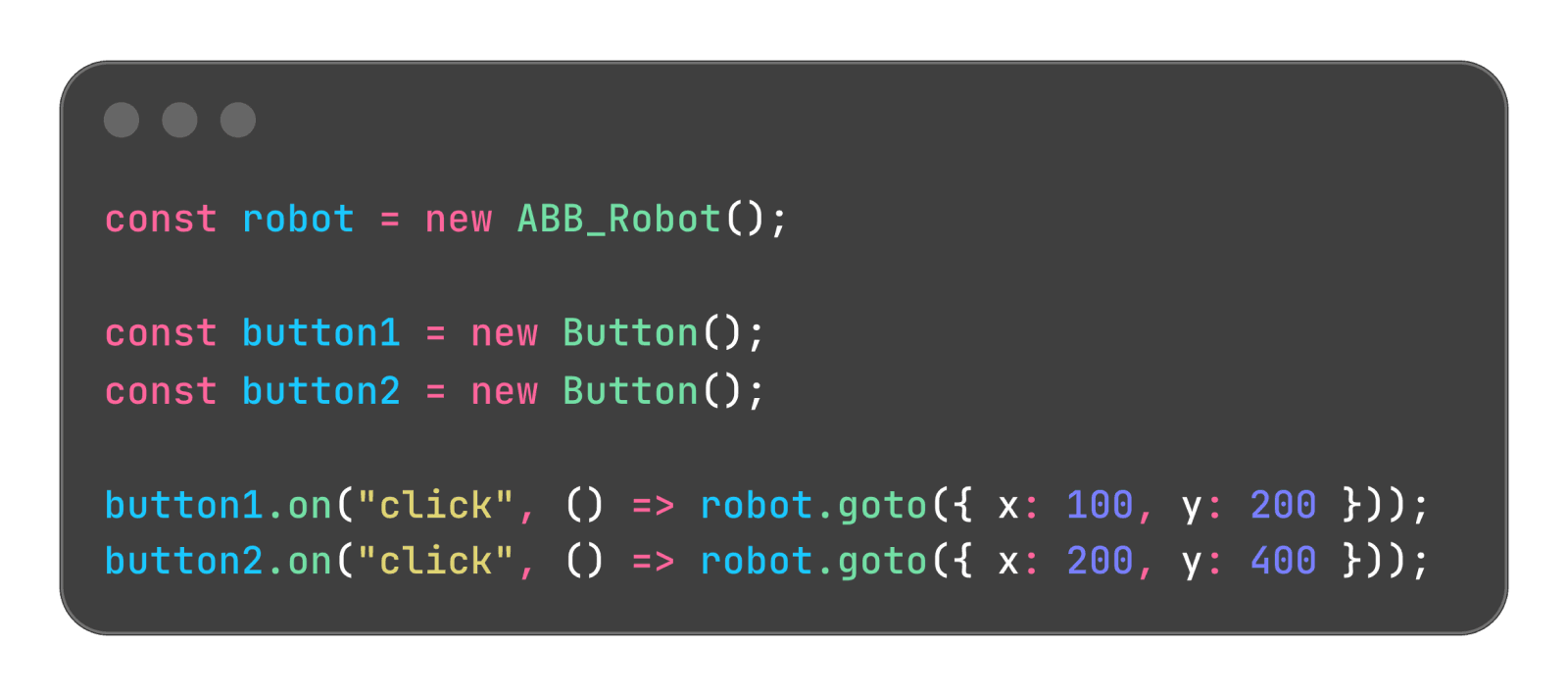
Write processes like scripts
Once interfaces have been defined, its easy to fill your machines with life. It doesn’t matter if you are using simple IoT devices or complicated robots.
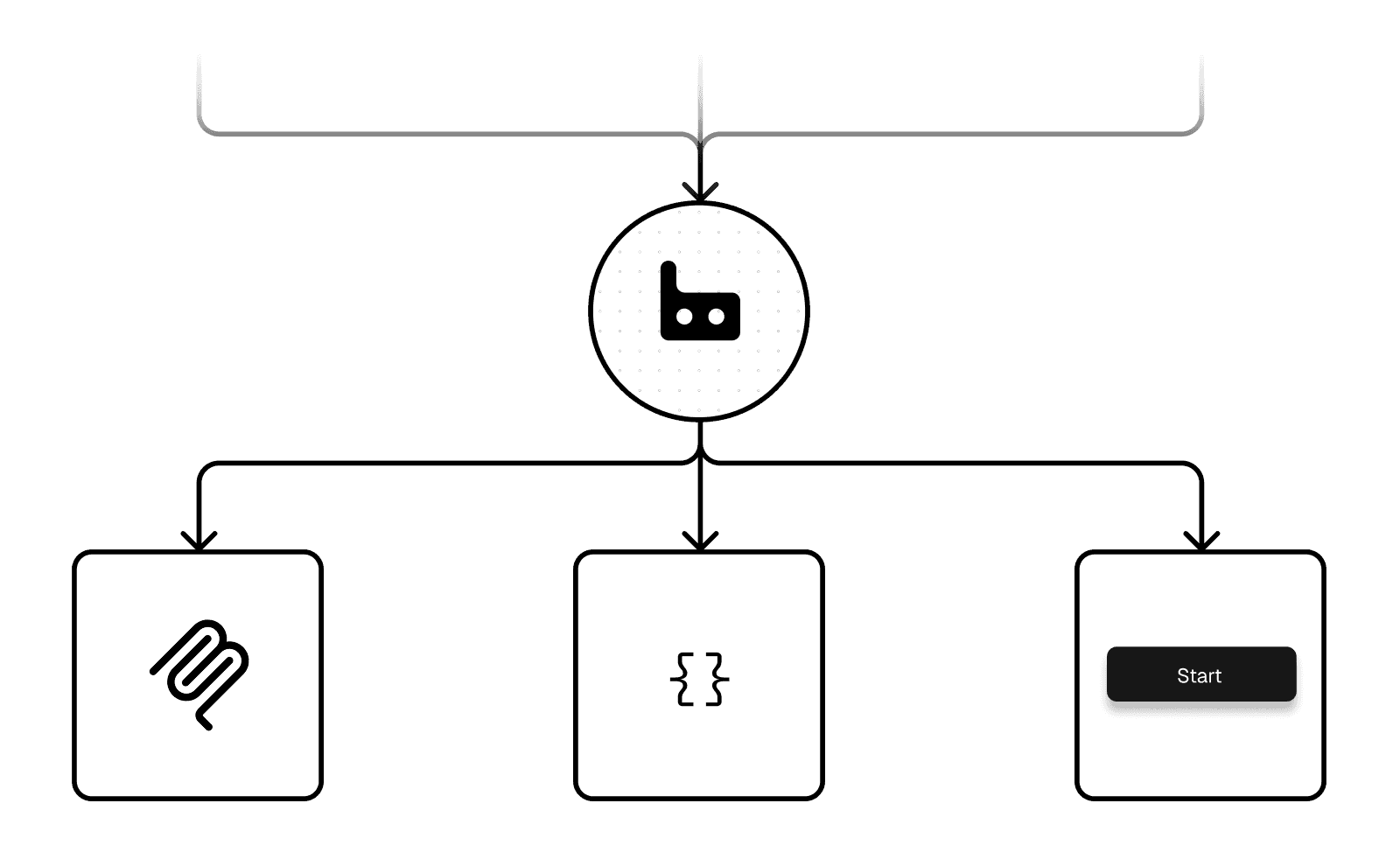
Batteries included
Define your machine using a couple of simple properties and you get all you need: a user interface, a documented REST-API and an MCP-Server for your AI-agents.
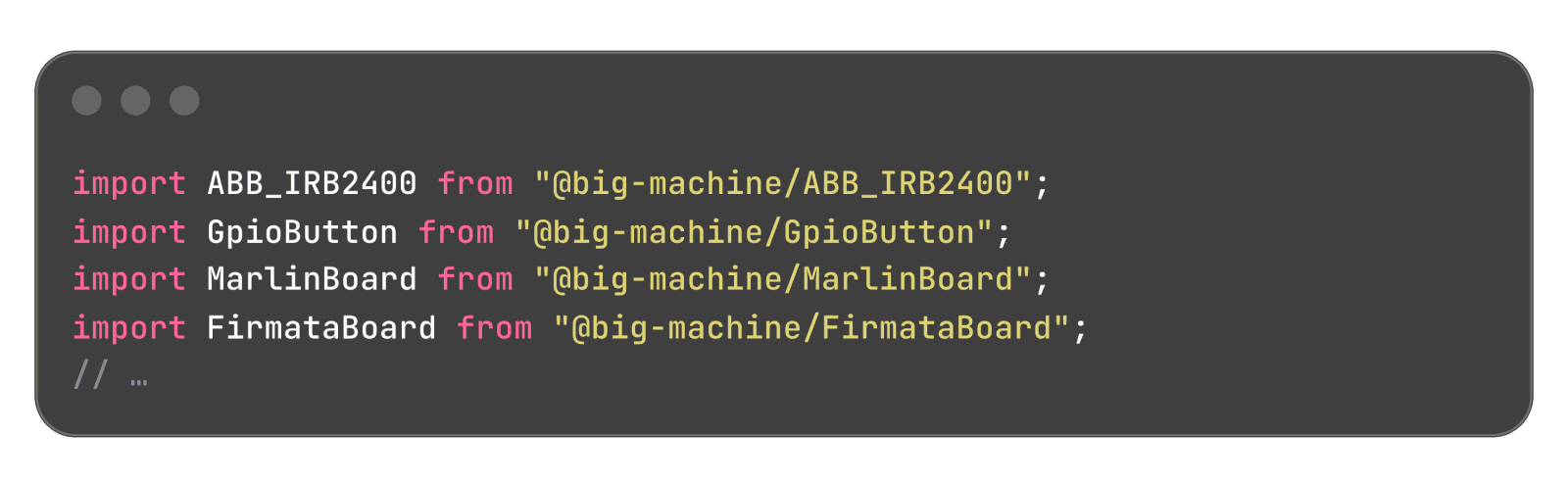
Growing ecosystem
The ecosystem of available integrations is growing rapidly. You can find a list of all available integrations in the documentation. And if you miss something, you can easily create your own integration.